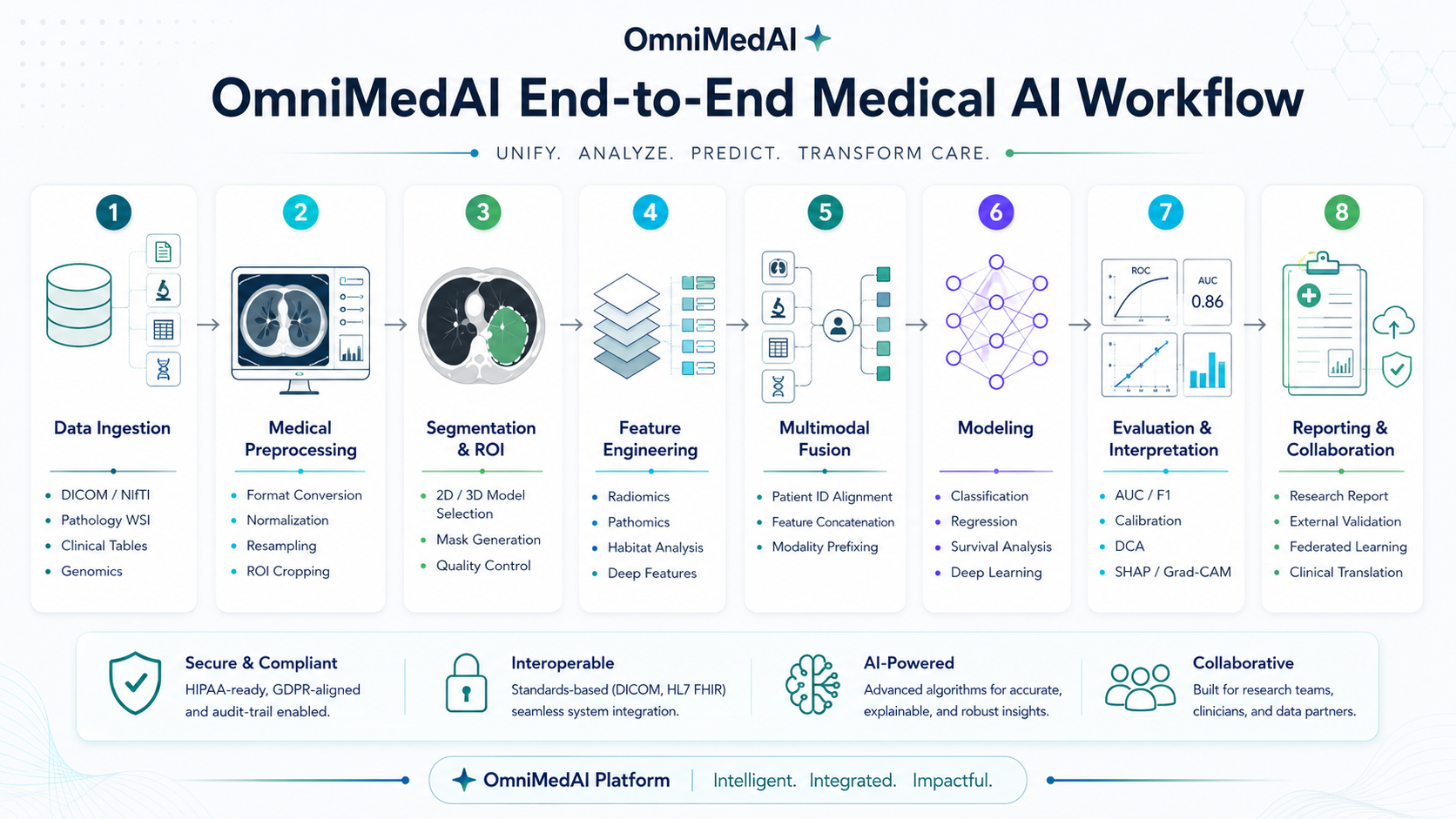
Platform workflow visualization for the OmniMedAI end-to-end medical AI pipeline.
OmniMedAI connects imaging, pathology, clinical data, radiomics, habitat modeling, multimodal fusion, machine learning, and clinical evaluation into a modular research-grade platform.
Explore how OmniMedAI organizes multimodal medical data, feature engineering, model development, validation, and clinical translation into a connected research workflow.
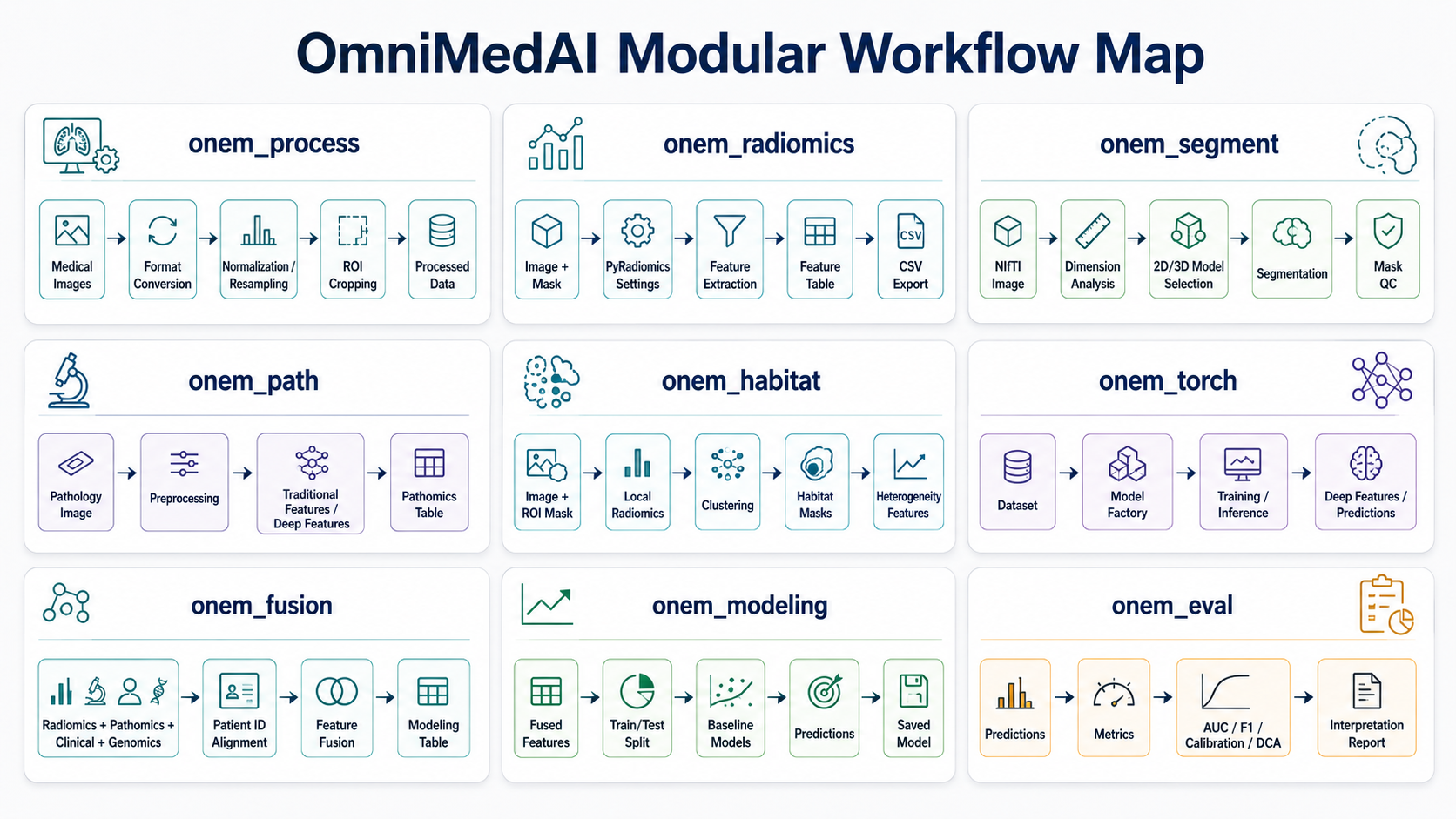
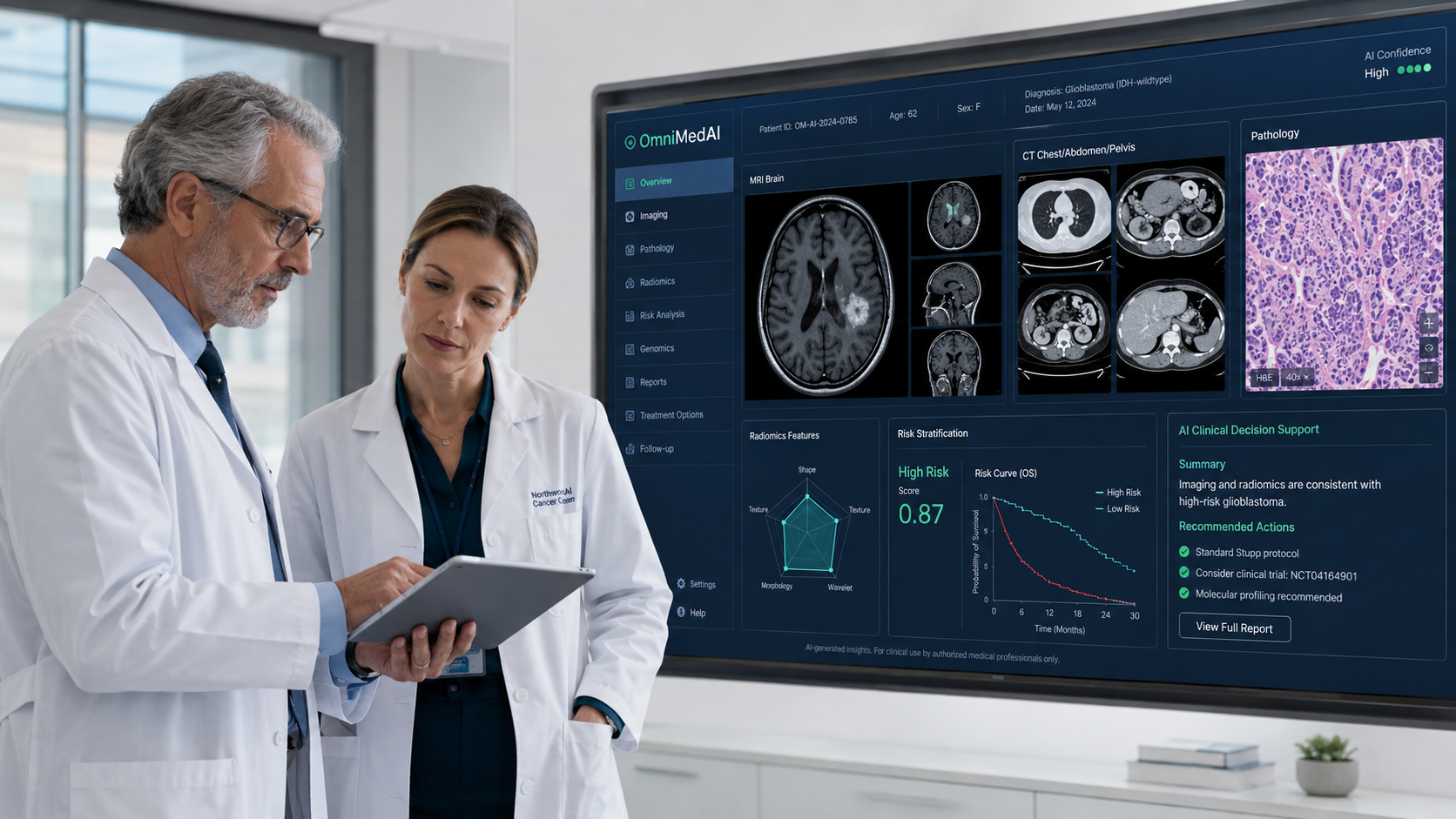
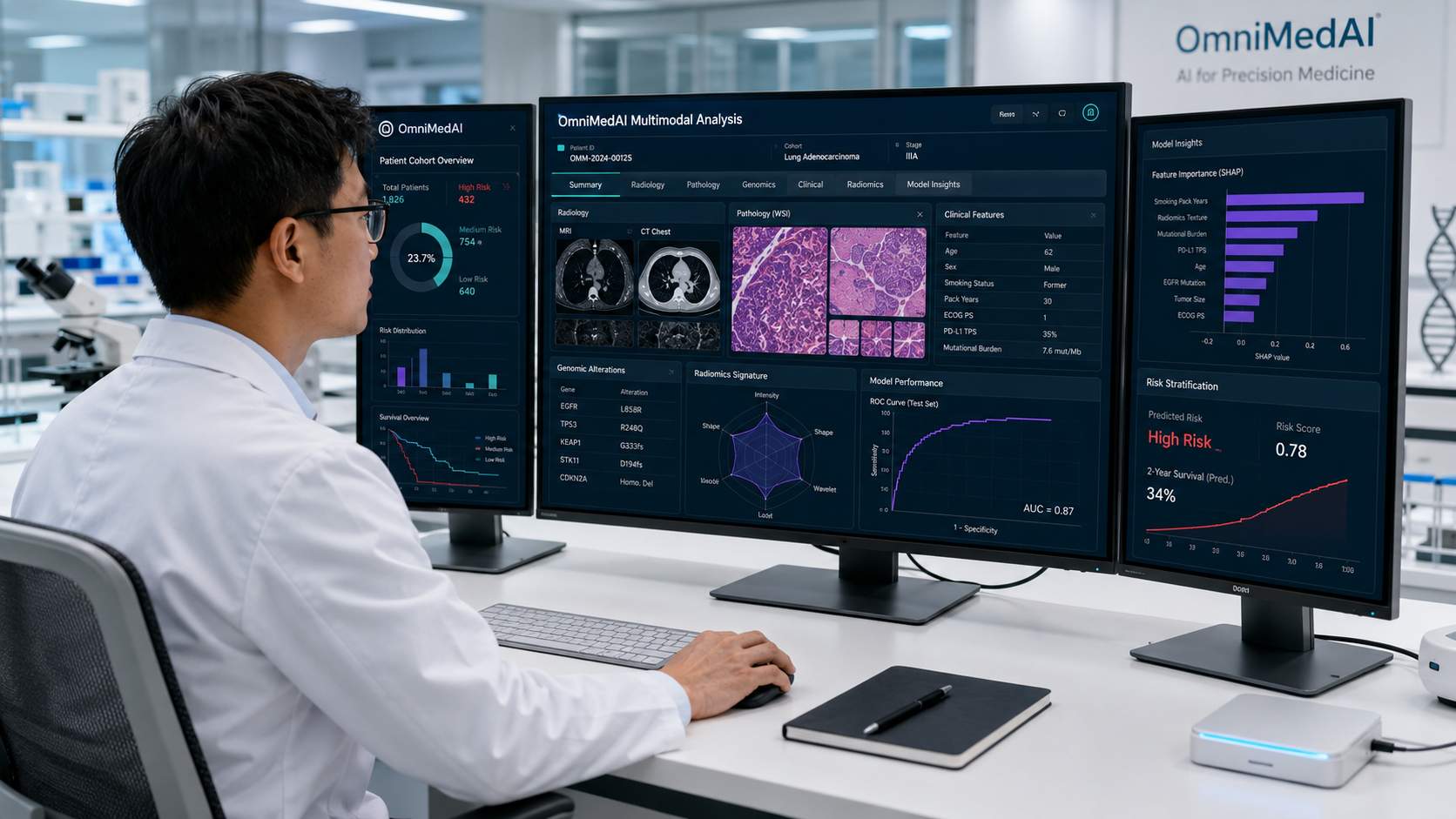
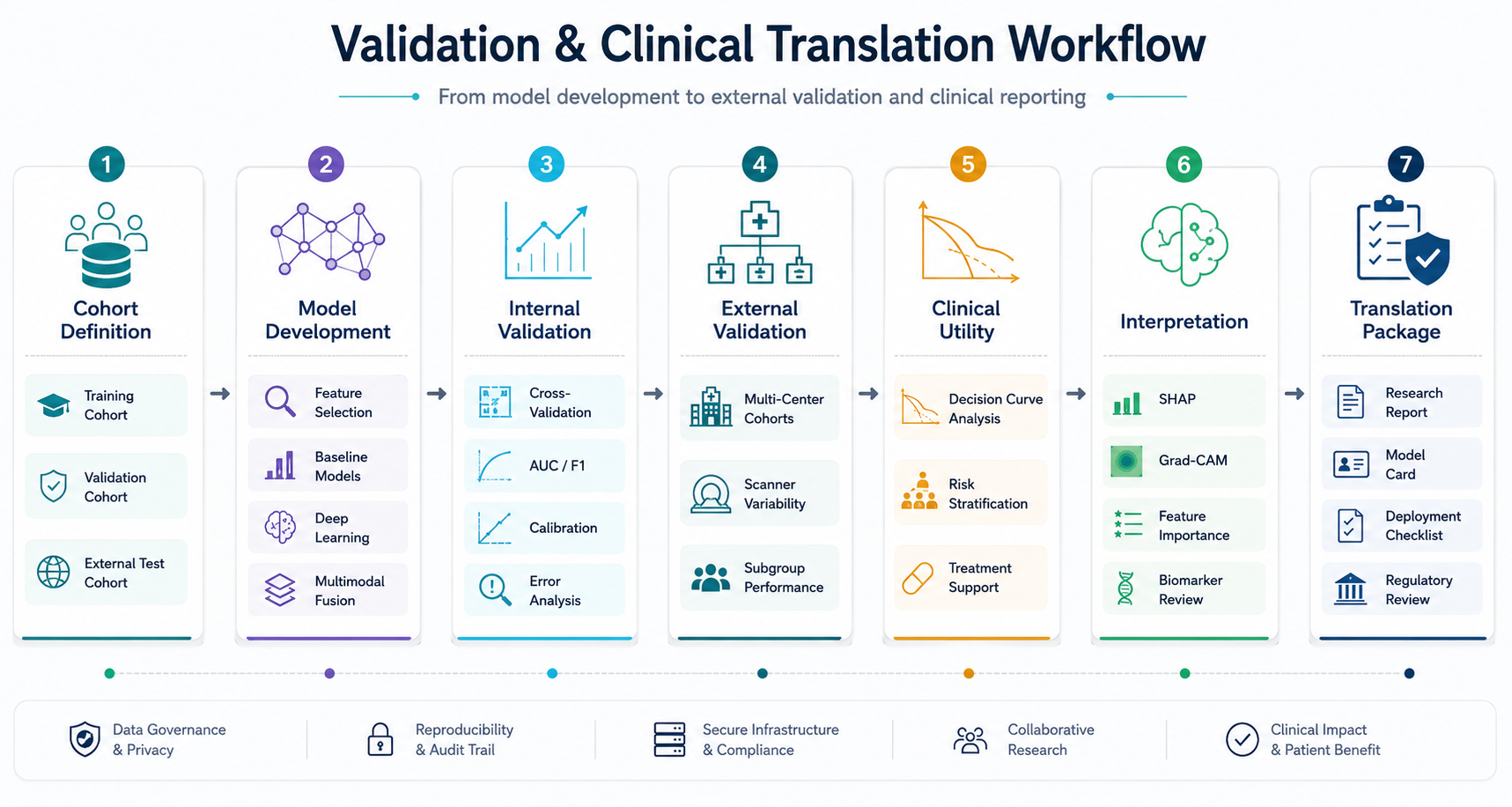
Each module can be used independently or chained into a full multimodal modeling workflow for clinical research and AI validation.
Convert DICOM/NIfTI, normalize images, resample volumes, and prepare ROI data for feature extraction.
Extract reproducible first-order, texture, and shape features from image-mask pairs with PyRadiomics.
Route cases through 2D or 3D ROI segmentation workflows and post-process mask outputs.
Extract classical image features and deep pathology representations for WSI-driven research.
Compute local radiomics, cluster tumor subregions, and characterize intratumoral heterogeneity.
Fuse multimodal features, train baseline models, and summarize predictive performance.
OmniMedAI organizes medical AI development into auditable stages: preprocessing, feature engineering, modeling, validation, and translation.
Standardize images, masks, pathology slides, clinical tables, and patient identifiers.
Generate radiomics, pathomics, habitat, and deep features with documented settings.
Fuse modalities, train baseline models, and preserve modeling-ready feature tables.
Report AUC, F1, calibration, external validation, interpretation, and clinical utility.
The platform is intended for translational research, biomarker discovery, clinical prediction modeling, and multi-center validation.
MRI/CT radiomics for molecular status prediction, lymph node risk, and treatment response studies.
Feature extraction and deep representations for histology-driven model development.
Intratumoral heterogeneity mapping through local features and clustering-based subregions.
Evaluation workflows for external validation, reporting, and privacy-preserving collaboration.
Current work focuses on stabilizing the SDK foundation while extending modeling, evaluation, and collaboration capabilities.
For professional or collaboration inquiries, contact the OmniMedAI team. The GitHub repository and email channel are kept unchanged for continuity.